Chess: India's Gift to the World of Strategy Games
The Timeless Intellectual Sport That Conquered the Globe 🌍♟️
Table of Contents
Chessstands as one of humanity's most enduring intellectual achievements, a strategic board game that traces its origins to ancient India. This captivating game of kings and empires has fascinated minds for centuries, evolving from its early forms into the sophisticated mental sport we know today.
Did You Know?The earliest precursor to modern Chess originated in India during the Gupta Empire around the 6th century AD. This ancient game was known asChaturanga, which literally means "four divisions" - representing the four branches of the Indian army.
Ancient Origins of Chess
The fascinating history ofChessbegins in the Indian subcontinent, where it emerged as a strategic pastime for royalty and intellectuals. The original Indian game of Chaturanga featured key elements that would define Chess for millennia to come.
Chaturanga was played on an 8x8 board, much like modern Chess, and included pieces that represented different military units: infantry, cavalry, elephantry, and chariotry. These would eventually evolve into the pawn, knight, bishop, and rook we know today.
The game's strategic depth and military symbolism made it particularly popular among the ruling classes, who saw it as both entertainment and mental training for battlefield tactics and strategic planning.
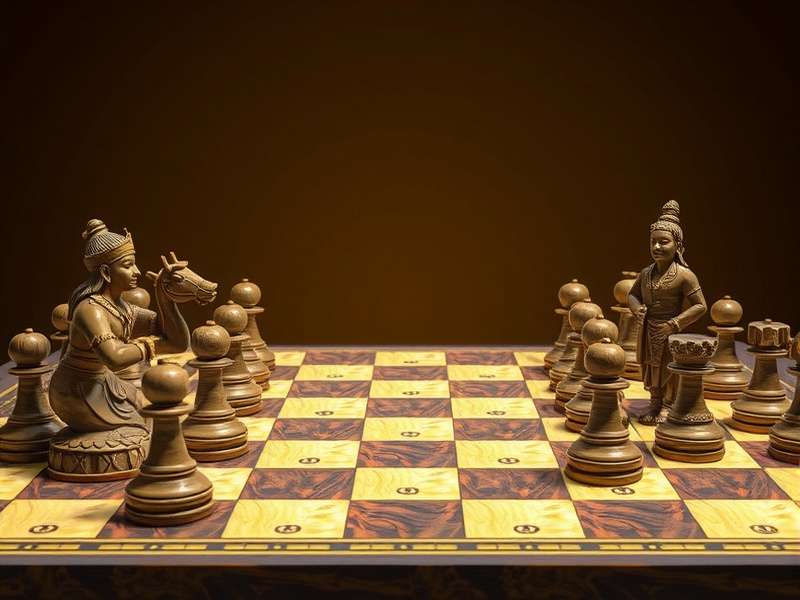
Artistic representation of ancient Chaturanga, the precursor to modern Chess
Evolution and Global Spread
From its Indian origins,Chessbegan a remarkable journey across continents and cultures. Persian traders and travelers encountered the game and adopted it asShatranj, introducing it to the Islamic world where it flourished during the Golden Age of Islam.
The Arab expansion carried Chess across North Africa into Spain and Southern Europe, where it gradually transformed into the game we recognize today. Significant rule changes occurred during the European Middle Ages, accelerating gameplay and increasing strategic complexity.
Key Transformation:The most significant change occurred in 15th century Europe when the queen piece gained its modern powerful movement capabilities. This innovation, known as "mad queen chess," dramatically increased the game's dynamism and popularity.
By the 19th century,Chesshad established itself as a global phenomenon, with standardized rules, international tournaments, and a growing community of dedicated players. The first official World Chess Championship in 1886 marked the game's arrival as a serious competitive sport.
Rules and Gameplay of Chess
ModernChessis played on a square board divided into 64 alternating light and dark squares. Each player begins with 16 pieces: one king, one queen, two rooks, two bishops, two knights, and eight pawns.
Basic Movement Rules
King:Moves one square in any direction. The most important piece that must be protected at all costs.
Queen:The most powerful piece, moving any number of squares vertically, horizontally, or diagonally.
Rook:Moves any number of squares horizontally or vertically. Participates in the special castling move with the king.
Bishop:Moves any number of squares diagonally. Each player starts with one bishop on light squares and one on dark squares.
Knight:Moves in an L-shape (two squares in one direction, then one square perpendicular). The only piece that can jump over other pieces.
Pawn:Moves forward one square, but captures diagonally. On its first move, it can advance two squares. Can be promoted to any other piece upon reaching the opposite side.
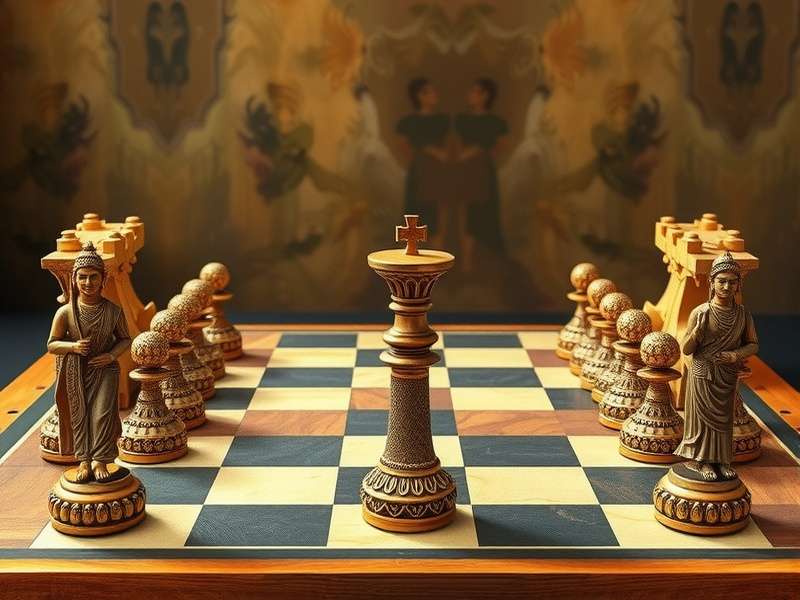
Standard starting position for a game of Chess
Special Moves and Rules
Castling:A move involving the king and one rook that serves both to safeguard the king and connect the rooks. This is the only move where two pieces move simultaneously.
En Passant:A special pawn capture that can occur immediately after a pawn moves two squares forward from its starting position and an opponent's pawn could have captured it had it moved only one square.
Promotion:When a pawn reaches the opposite side of the board, it must be promoted to a queen, rook, bishop, or knight of the same color. This rule often determines the outcome of endgames.
Check and Checkmate:The primary objective of Chess is to checkmate the opponent's king. Check occurs when the king is under immediate attack. Checkmate happens when the king is in check and there is no legal move to escape the threat.
Strategy and Tactics in Chess
The depth ofChessstrategy is what makes the game endlessly fascinating. Players must balance multiple strategic concepts while anticipating their opponent's plans.
Fundamental Strategic Principles
Control the Center:The four central squares (d4, d5, e4, e5) are critically important because pieces placed there have maximum mobility and influence over the board.
Develop Your Pieces:Effective development means bringing your knights and bishops into the game quickly, controlling key squares, and preparing to connect your rooks.
King Safety:Ensuring your king is secure, usually through castling and maintaining a protective pawn structure, is essential throughout the game.
Pawn Structure:The arrangement of pawns forms the skeleton of your position. Weak pawns (isolated, doubled, or backward) can become permanent targets for your opponent.
Pro Tip:The initiative in Chess is often more valuable than small material advantages. A player with the initiative forces their opponent to respond to threats, limiting their ability to execute their own plans.
Tactical Motifs
Forks:A single piece attacks two or more opponent pieces simultaneously, often forcing the loss of material.
Pins:A piece is attacked but cannot move without exposing a more valuable piece behind it.
Skewers:Similar to a pin, but the more valuable piece is in front and must move, exposing the less valuable piece behind it to capture.
Discovered Attacks:Moving one piece reveals an attack by another piece, creating unexpected threats.
Zwischenzug:German for "in-between move," this tactic involves making an unexpected move that changes the situation before completing an expected sequence.
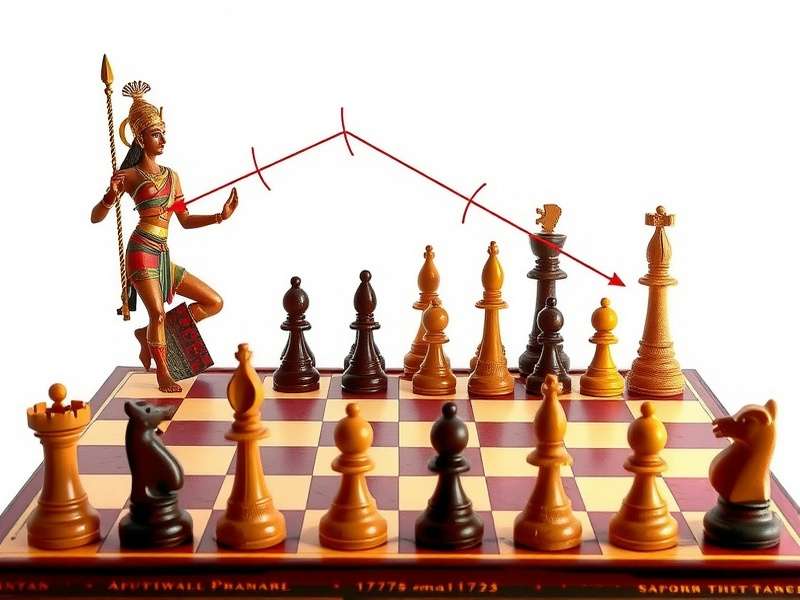
Example of tactical combinations in Chess - forks, pins, and discovered attacks
Cultural Significance of Chess
Beyond its status as a game,Chesshas profound cultural significance worldwide. In India, its country of origin, Chess holds a special place as both heritage and living tradition.
Indian literature and art frequently reference Chess, with the game appearing in ancient texts, poetry, and temple carvings. The strategic concepts of Chess have influenced military theory, political strategy, and even business management principles.
The game's terminology has entered everyday language across cultures. Phrases like "checkmate" (from Persian "shah mat" meaning "the king is helpless"), "stalemate," and "gambit" are used metaphorically in diverse contexts.
Chess in Indian Society
In contemporary India,Chessenjoys widespread popularity, with the country producing numerous world-class players. The All India Chess Federation oversees the game's development, organizing tournaments from grassroots to elite levels.
Indian Grandmasters like Viswanathan Anand, who held the World Chess Championship title from 2007 to 2013, have inspired generations of young players. Anand's success demonstrated that India could compete and excel at the highest levels of international Chess.
Cultural Legacy:Many Indian schools now include Chess in their curriculum, recognizing its benefits for developing critical thinking, concentration, and problem-solving skills. This educational adoption ensures the game's continued relevance for future generations.
Modern Competitive Chess
The landscape of competitiveChesshas transformed dramatically in the 21st century, with technology playing an increasingly central role in both preparation and play.
The Digital Revolution in Chess
Computer engines like Stockfish and Leela Chess Zero have reached superhuman playing strength, fundamentally changing how players analyze positions and prepare for opponents. These engines can evaluate positions with astonishing accuracy, revealing resources that might escape even the strongest human players.
Online platforms have democratized access to high-level Chess, allowing players from around the world to compete regardless of geographic location. Websites and apps offer instant matchmaking, lessons from masters, and the ability to watch elite tournaments in real-time.
Professional Chess Circuit
The modern professionalChesscircuit includes numerous prestigious tournaments with substantial prize funds. The World Chess Championship remains the pinnacle event, but other competitions like the Candidates Tournament, Grand Prix series, and national championships attract top players and global attention.
Rating systems, particularly the Elo system, provide objective measures of player strength and determine qualification for elite events. The coveted title of Grandmaster (GM) represents the highest achievement in competitive Chess, requiring exceptional performance in international tournaments.
New Era:The 2023 FIDE World Chess Championship match between Ding Liren and Ian Nepomniachtchi highlighted the global nature of modern Chess, with players from China and Russia competing for the title of a game invented in India centuries ago.
Cognitive Benefits of Playing Chess
Extensive research has demonstrated that regularChesspractice provides significant cognitive benefits across multiple domains. These advantages extend beyond the chessboard to academic and professional contexts.
Developmental Advantages
Improved Problem-Solving Skills:Chess requires identifying patterns, calculating variations, and evaluating positions - all essential components of effective problem-solving.
Enhanced Memory:Players must remember opening theory, typical middlegame structures, and endgame techniques, exercising both short-term and long-term memory.
Increased Concentration:The focused attention required during games trains the mind to maintain concentration over extended periods, resisting distractions.
Strategic Thinking:Chess develops the ability to think ahead, consider multiple possibilities, and formulate long-term plans while adapting to changing circumstances.
Creativity and Pattern Recognition:While Chess has logical foundations, creative breakthroughs often decide games. Players learn to recognize recurring patterns while also discovering original solutions.
Educational Applications
Many educational systems worldwide have incorporatedChessinto their curricula, particularly for developing critical thinking in mathematics and science. Studies have shown correlations between chess instruction and improved academic performance, especially in quantitative subjects.
Chess programs in schools have demonstrated benefits for students of all ability levels, with particular positive impacts on at-risk youth. The game provides a structured intellectual challenge that builds confidence and resilience through gradual improvement.
Lifelong Benefits:The cognitive advantages gained from Chess persist throughout life, with studies suggesting that regular play may help maintain mental acuity in older adults and potentially delay cognitive decline.
The Enduring Legacy of Chess
From its ancient Indian origins to its current status as a global intellectual sport,Chesscontinues to captivate millions worldwide. This remarkable game combines art, science, and sport in a unique synthesis that challenges the mind while bringing people together across cultures and generations.
As technology transforms how we play and study Chess, the essential qualities that have made the game endure for centuries remain unchanged: the beauty of its logic, the depth of its strategy, and the universal appeal of a fair contest between two minds.
The future ofChessappears brighter than ever, with growing participation, technological innovation, and continued recognition of its cognitive and educational benefits. As new generations discover this ancient game, the legacy of India's gift to the world will continue for centuries to come.